
When planning a trip to Costa Rica, it is easy to begin with what there is to see: rainforests, volcanoes, beaches, wildlife and waterfalls.
But before choosing an itinerary, it helps to understand a little about the country behind those landscapes.
How can such a small nation hold so much biodiversity? Why does Costa Rica have no standing army? Is it true that almost all of its electricity comes from renewable sources? What does the Nicoya Peninsula have to do with longevity and Guanacaste food? And how did a tropical country reverse decades of forest loss?
These are more than travel trivia. Together, they explain some of the choices, traditions and relationships with nature that visitors encounter once they arrive.
Here are five Costa Rica travel facts worth knowing before the trip.
1. How can such a small country hold so much biodiversity?
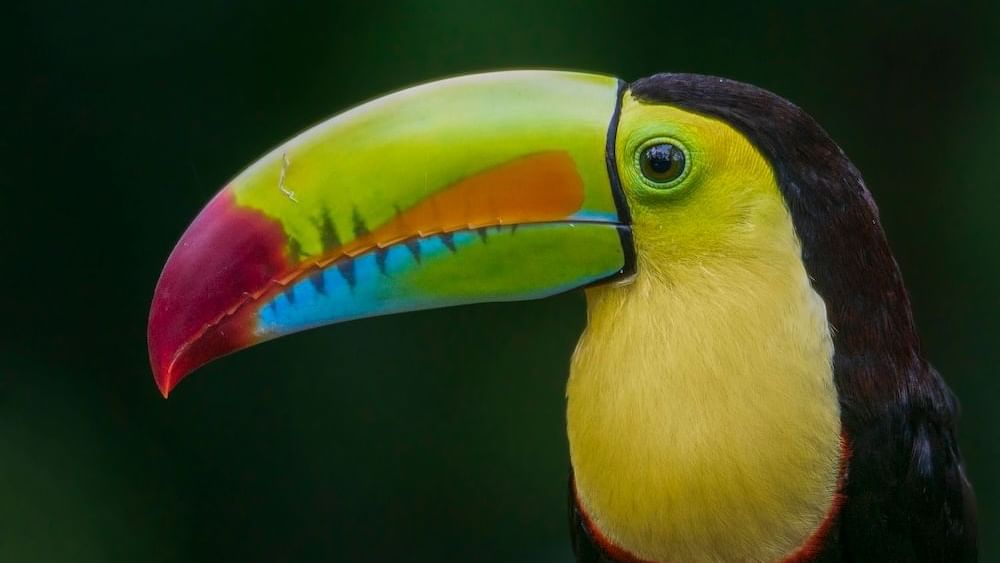
Costa Rica covers only about 0.03% of the planet’s surface, yet SINAC states that the country contains around 5% of all known natural species on Earth.
Costa Rica’s official tourism information estimates nearly half a million species within about 51,100 square kilometers. SINAC also states that roughly one quarter of the national territory is under some category of protection across 11 conservation areas.
That concentration of life helps explain why different parts of the country can feel dramatically different. A beach trip can be followed by tropical rainforest, volcanic highlands, wetlands or cloud forest without crossing an international border.
Guanacaste is a particularly strong example. The Area de Conservación Guanacaste integrates marine-coastal ecosystems, tropical dry forest, tropical rainforest and tropical cloud forest in one continuous conservation landscape. SINAC estimates approximately 235,000 species there, representing about 2.6% of global biodiversity.
The useful lesson for a traveler is simple: Costa Rica may look small on a map, but its ecological contrasts are not small.
Travel takeaway: Costa Rica may be small in area, but moving through its ecosystems can feel like moving through several different countries.
2. Does Costa Rica really generate almost all of its electricity from renewable sources?
Yes. Costa Rica produced 98.6% of its electricity from renewable sources in 2025, using water, geothermal energy, wind, biomass and solar power.
The figure was published by the Costa Rican Electricity Institute (ICE) in July 2026 and is the latest verified annual result available for this article.
For travelers, geothermal energy makes the national statistic especially easy to connect with the landscape. Costa Rica’s volcanic geology does more than create peaks, geothermal features and hot springs; volcanic resources are also used to generate electricity.
On the western side of the Rincón de la Vieja volcanic massif, ICE is developing the Borinquen I Geothermal Project in Cañas Dulces, Liberia. The plant is designed for 55 MW of installed capacity and is scheduled to enter operation in 2027. It is not yet producing electricity.
Can travelers actually see part of this renewable-energy story?
In Guanacaste, yes. Renewable-energy infrastructure forms part of the visible landscape in several areas.
From Restaurante El Mirador at Buena Vista del Rincón, visitors can see the area of the Borinquen I Geothermal Project and wind-energy towers across the wider Guanacaste landscape. The restaurant’s official page specifically identifies both views.
That turns a technical statistic into a visual connection: volcano → geothermal resource → renewable electricity, while the same broader landscape also shows wind being used as an energy source.
In Guanacaste, renewable energy can become something visitors observe in the landscape, not only something they read about before arriving.
3. Why does Costa Rica have no standing army?
The symbolic abolition of Costa Rica’s army took place on December 1, 1948, at the Bellavista Barracks in San José; the Museo Nacional notes that the abolition became effective in 1949.
The former military barracks later became the Museo Nacional de Costa Rica, giving the historical decision a physical symbol that visitors can still encounter today.
Costa Rica’s Presidency connects the end of the standing army with a national decision to focus greater effort and resources on education and health, reinforcing the country’s civilist tradition.
The history is more complex than a slogan, but it remains useful context for understanding why peace, education, conservation and civic identity appear so often in the way Costa Rica describes itself.
Why it matters: A former military barracks becoming the national museum is one of the clearest symbols of Costa Rica’s post-1948 civil identity.
4. What does Nicoya’s Blue Zone have to do with Guanacaste food?
Costa Rica’s official tourism organization continues to identify the Nicoya Peninsula in Guanacaste as one of the world’s five Blue Zones, associated with populations known for unusual longevity.
The official explanation does not reduce longevity to one ingredient. It describes a broader pattern that includes everyday movement, family relationships, community, purpose and a traditionally plant-rich way of eating that includes beans and grains such as corn.
That makes the Blue Zone story especially relevant to Guanacaste’s culinary heritage. Corn is not simply a staple ingredient; it is part of the region’s cultural history, expressed through preparations such as tortillas, rosquillas, tanelas, tamales and other traditional foods.
No single Guanacaste dish should be presented as the cause of longevity. The more useful connection is cultural: food, agriculture, family, movement, community and place remain intertwined.
Can travelers taste that food heritage in Guanacaste?
Yes. Traditional Guanacastecan cuisine remains living culture, and tasting it is one of the most natural ways to connect with the region.
At Buena Vista del Rincón, visitors can enjoy traditional Guanacastecan preparations as a natural part of the experience. This is not a “Blue Zone menu” created for tourists; it reflects a culinary tradition that already belongs to Guanacaste.
The garden and integrated productive system at Buena Vista del Rincón contribute ingredients used in its kitchens. The operation includes farming, dairy production, a traditional sugar mill, coffee roasting and a garden, while official Buena Vista information also highlights traditional preparations such as tortillas, rosquillas and tanelas.
The relationship can be understood simply: soil → harvest → kitchen → table.
Visitors do not only hear about Guanacaste’s culinary heritage. They can taste it in a place where agriculture, food and tradition remain connected. The connection with the Nicoya Blue Zone is cultural, not medical.
5. Did Costa Rica really reverse deforestation?
Yes. The World Bank describes Costa Rica as the first tropical country to reverse deforestation, after forest cover had fallen sharply during the twentieth century.
World Bank reporting describes forest cover recovering to around 60% after shrinking to about 40% in the late 1980s. The World Development Indicators series reports forest area at 60.4% of land area in 2023, the latest value in that series.
The recovery did not happen overnight and does not mean conservation work is finished. It reflects decades of policy, changing land use, public and private conservation, incentives and a growing recognition of the ecological and economic value of forests.
For a traveler, the important idea is that a forest visited today also has a history: it may have been protected, recovered, connected or managed through choices made long before the visitor arrived.
Can travelers experience forest conservation instead of only reading about it?
Yes. At Buena Vista del Rincón, conservation forms part of the setting where nature, adventure and wellness experiences take place.
The Buena Vista del Rincón Private National Wildlife Refuge encompasses 149 hectares of tropical forest dedicated to conservation. This 149-hectare figure is confirmed operational information for Buena Vista del Rincón.
The distinction matters: the forest is not decoration around the activities. It is the environment where they happen.
Adventure and wellness experiences take place within this conserved tropical-forest setting, allowing visitors to encounter the forest as a living ecosystem rather than as a landscaped backdrop. Wildlife remains free-moving in its natural habitat, so specific sightings are never guaranteed.
The forest is not decoration around the experience. It is the environment where the experience happens.
What do these five Costa Rica travel facts have in common?
They show that many things travelers associate with Costa Rica today are connected to decisions, traditions and relationships built over generations.
Biodiversity is biological. Renewable electricity is technical and infrastructural. The abolition of the army is historical and political. Nicoya’s Blue Zone is cultural and demographic. Forest recovery is environmental.
Yet together they raise the same useful question: how does a small country live with the natural and cultural resources that make it distinctive?
Costa Rica has not solved every environmental or social challenge, and these facts should not be used to present the country as perfect. Their value is context. They help visitors see relationships between volcanoes and electricity, forests and conservation, farms and food, recipes and memory, communities and tourism.
How do these facts become real experiences in Guanacaste?
At Buena Vista del Rincón, several of the facts travelers learn before a Costa Rica trip become things that can be seen, explored, tasted and understood.
This does not mean one destination represents an entire country. It means that several national stories intersect in one place on the slopes of Rincón de la Vieja.
SEE — Renewable energy in the landscape
From Restaurante El Mirador, visitors can look toward the area of the Borinquen I Geothermal Project and wind-energy towers across the Guanacaste landscape.
EXPLORE — A conserved tropical forest
The 149-hectare Buena Vista del Rincón Private National Wildlife Refuge provides the natural setting for adventure and wellness experiences.
TASTE — Guanacaste from garden to table
Traditional Guanacastecan food and ingredients from the garden and integrated productive system connect agriculture, culinary heritage and the visitor experience.
UNDERSTAND — Regeneration behind tourism
Buena Vista del Rincón’s sustainability program includes circular-economy practices, food-waste reduction, pollinator initiatives, environmental education and community participation.
Why should travelers know these things before visiting Costa Rica?
Because knowing a little about the country before arriving can change what a traveler notices once the trip begins.
A volcano can also become a story about geothermal energy. A forest can prompt questions about conservation and land-use history. A handmade tortilla can connect a meal with Guanacaste’s agricultural and cultural heritage. A Blue Zone can be understood as a complex way-of-life story rather than a miracle-food claim.
That is when travel becomes more than moving between attractions. It becomes another way to understand where you are.
Frequently Asked Questions
What should travelers know about Costa Rica before visiting?
Beyond practical travel information, biodiversity, renewable electricity, the abolition of the army, Nicoya’s Blue Zone and forest recovery provide useful context for understanding Costa Rica’s nature, society and culture.
What percentage of the world’s known natural species is found in Costa Rica?
SINAC currently states that Costa Rica contains around 5% of all known natural species on the planet, while the country covers only a very small fraction of Earth’s surface.
How much of Costa Rica’s electricity is renewable?
Costa Rica produced 98.6% of its electricity from renewable sources in 2025, using water, geothermal energy, wind, biomass and solar power.
Is Nicoya still considered a Blue Zone?
Costa Rica’s official tourism organization continues to present the Nicoya Peninsula as one of five Blue Zones and describes longevity through multiple lifestyle, social and environmental factors.
Can travelers experience sustainability in Guanacaste?
Yes. Protected forest, agriculture, traditional food, renewable-energy landscapes, circular-economy practices, environmental education and community initiatives can all make sustainability more tangible during a Guanacaste trip.
Know the facts. Then experience the connections.
Before a trip, Costa Rica can surprise with numbers: 0.03% of the planet’s surface, around 5% of known natural species, 98.6% renewable electricity in 2025, no standing army, one of the five Blue Zones recognized by the official tourism organization, and a forest-recovery story recognized internationally.
Once visitors arrive, the more interesting question is what those facts look like in real life.
At Buena Vista del Rincón, some of them become part of the landscape: conserved tropical forest to explore, renewable-energy infrastructure to observe, Guanacaste food connected to the land, and regenerative practices that reveal what happens behind a tourism experience.
Learn more about Sustainability and Regenerative Development at Buena Vista del Rincón.