
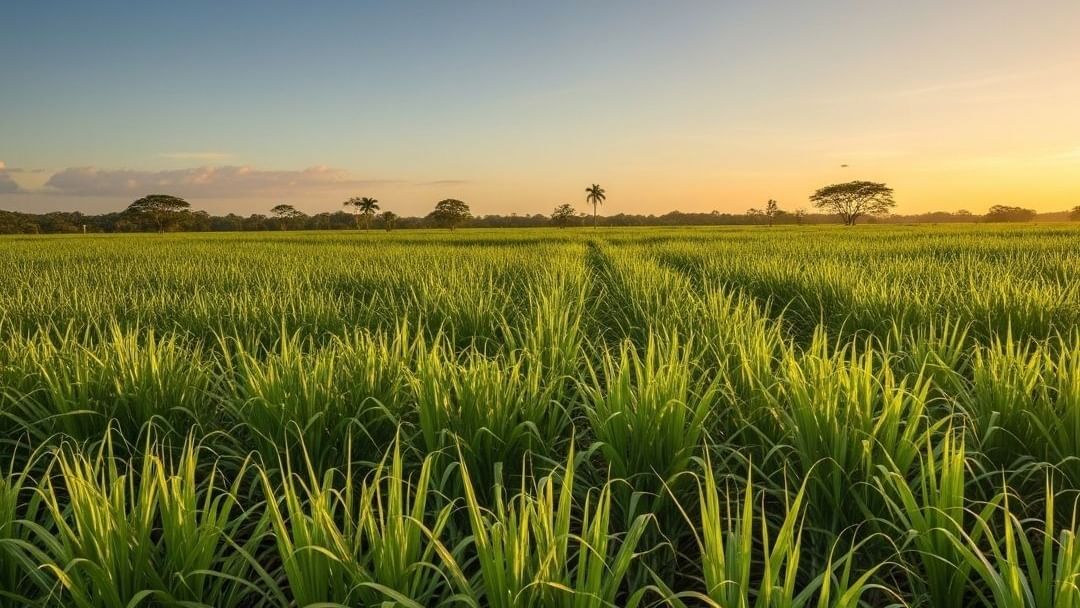
If you've visited the province of Guanacaste, you've probably heard of Cañas Dulces, the second district of the Liberia canton. It's a name that evokes something special, but have you ever wondered where this unique and "sweet" designation comes from? Here, we'll tell you the fascinating history of our beloved town.
The Story Behind the Name
Thanks to the valuable information shared by Don Luis Ángel Brizuela, affectionately known as Cholo Brizuela (a member of the Association for the Culture of Liberia), we can delve into the book "Historia de Cañas Dulces," by author Juan Rafael Ramírez Alvarado (Cañas Dulces de Liberia, 1939-2020).
Don Juan reveals in his book (p.29) that: "The name Cañas Dulces derives from one of the most characteristic activities of the Guanacaste province and the country: the planting of sugarcane." This product was not only essential for human consumption but also fundamental for feeding livestock, a predominant activity in the haciendas of that era.
Initially, the place was known as Santa Teresa de Cañas Dulces, a name reflecting the religious practices of the time. Over time, the spiritual part faded, and only the name Cañas Dulces remained.
Furthermore, Don Célimo Guevara provided a key piece of information to Juan Rafael Ramírez. He reported that Román Guadamúz, nicknamed "Chontales," had exceptionally sweet sugarcane fields on his "Pan de Azúcar" farm. From this sugarcane, he extracted juice using wooden presses to make traditional tapas de dulce (blocks of raw sugar). This practice and the sweetness of the sugarcane from that farm significantly contributed to the name Cañas Dulces, enduring to this day.
Sweetening the Present and the Future
Today, in Cañas Dulces, we continue to honor our tradition and the legacy of our name. We persist in planting and processing sugarcane in the most authentic Guanacastean way: using a wooden sugar mill (trapiche) operated by oxen. From this artisanal process, we extract the sweet sugarcane juice, with which we prepare delicious traditional recipes that delight locals and visitors alike.
Even the bagasse, what remains of the sugarcane after extracting the juice, serves a vital purpose: we feed our horses with it, ensuring they are full of health and energy for the horseback rides that are so much a part of our culture.
So, the next time you hear about or visit Cañas Dulces, you'll know that behind its name lies a rich history tied to the land, traditions, and, of course, the sweetness that characterizes us.